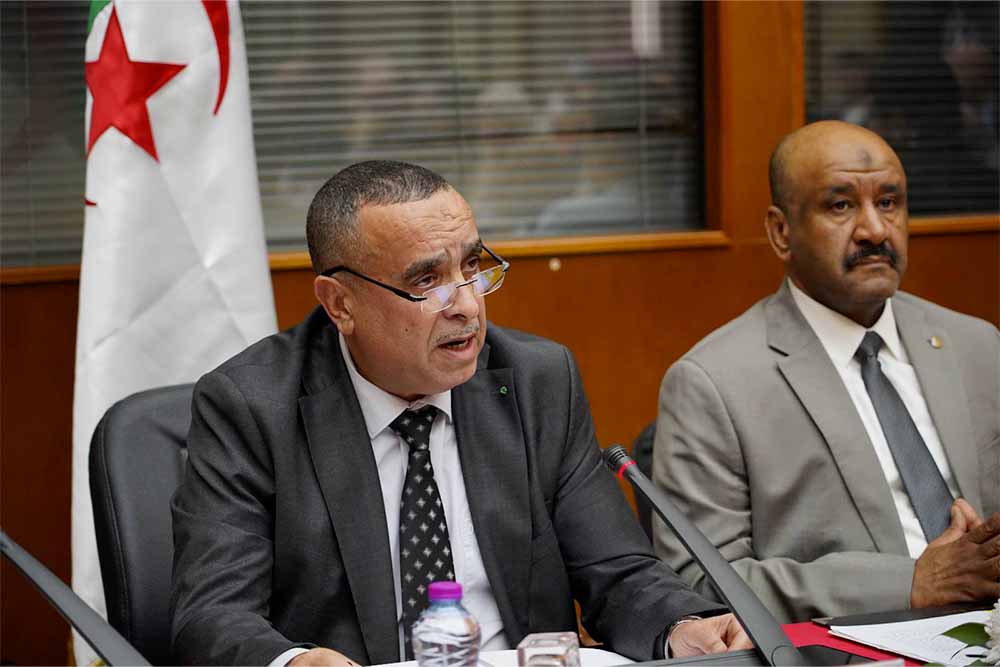
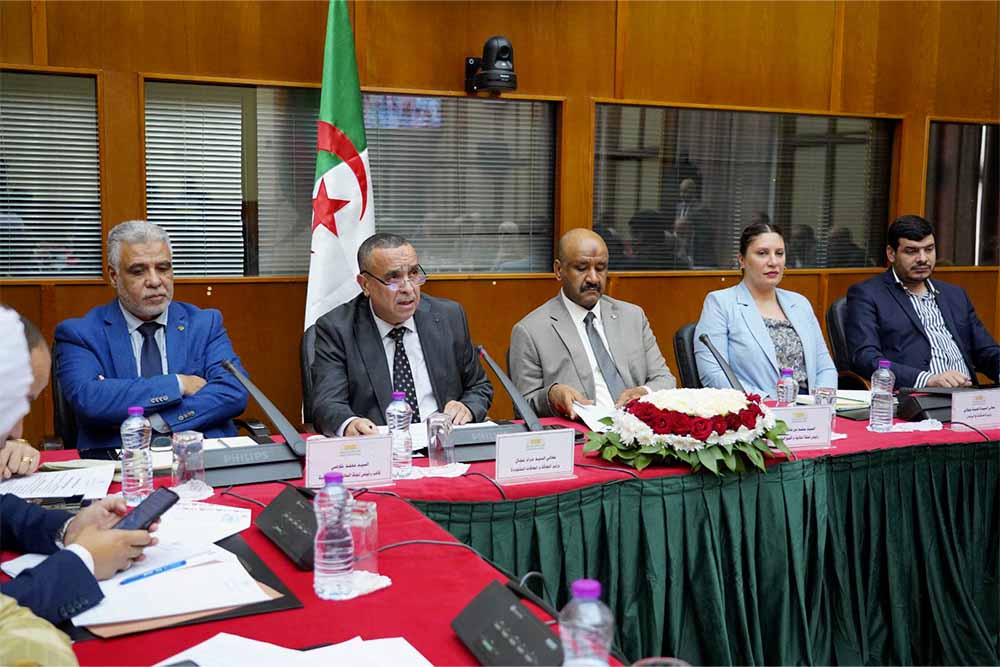
As part of the discussions on the budget of the energy and renewable energies sector in light of the 2026 Finance Bill, the Minister of Energy and Renewable Energies, Dr. Mourad Adjal, appeared today, Monday, October 27, 2025, before the Finance and Budget Committee of the National People's Assembly. He presented a detailed report on the sector’s budget during a session chaired by Mr. Mohamed Ben Hachem, Chairman of the Committee, and attended by the Minister of Relations with Parliament, Ms. Nadjiba Djilali, members of the committee, and officials from the ministry.
Dr. Mourad Adjal began his address by stressing that the program of the President of the Republic, Mr. Abdelmadjid Tebboune, has placed the satisfaction of the population’s and the national economy’s basic energy needs among its top priorities. This objective, he explained, has been achieved through the implementation of electricity and gas connection programs. The electricity coverage rate has reached 99%, with more than 12.5 million customers, while gas coverage stands at 72%, serving over 8.2 million customers.
In discussing the sector’s accomplishments in implementing the state’s social policy, the Minister pointed out that since 2002, the energy sector has successfully connected more than 2.4 million homes to the gas network and over 456,000 homes to the electricity network. He added that the establishment of gas transmission and distribution networks has ensured service for 8.2 million customers, a figure expected to rise further upon completion of ongoing projects.
The Minister of Energy and Renewable Energies, Dr. Mourad Adjal, spoke about the sector’s major contribution to developing the national economic fabric and promoting private sector participation. He explained that the Sonelgaz Group successfully met energy demand in 2025 with ease and managed to connect 95,286 agricultural farms since the start of the program in 2022. Work is ongoing to complete the plan and exceed 100,000 connected farms by the end of the year. Additionally, 43 industrial zones have been connected to electricity (3 fully completed), and 29 zones to gas (19 fully completed), along with 100 business areas linked to electricity and 71 to gas.
Regarding the connection of social housing to electricity and gas, the Minister confirmed that all local programs have been completed. He also noted the completion of 1,000 charging stations for electric vehicles and the nearing completion of the free installation program for carbon monoxide detectors. Moreover, five desalination plants have been connected to the electrical network, and studies have been launched to connect three additional ones. The sector also played a key role in ensuring the successful start of the 2025–2026 school year.
On the subject of the energy transition program, Dr. Adjal discussed progress toward the goal of producing 15,000 MW of renewable energy by 2035. The first phase, involving 3,200 MW across 14 provinces, is already underway. The sector is also preparing to provide electricity to remote and off-grid regions, particularly in southern Algeria, while advancing the gradual development of hydrogen projects for multiple applications. Algeria, he stated, has completed its national hydrogen development strategy, though its implementation requires several key elements, such as regulatory and institutional frameworks, research initiatives, human capital development, technology transfer, and financing. Algeria has now entered the second phase of its roadmap through Sonelgaz and Sonatrach, focused on experimental hydrogen projects. Technical and economic feasibility studies have been launched to identify optimal capacities and specifications for efficient and profitable projects.
All these programs complement the Mediterranean power interconnection project between North and South, which reinforces Algeria’s role as a key energy supplier to Europe. In parallel, Sonelgaz continues efforts to maintain its leading position in electricity production, with multiple projects underway, including linking the southern grid to the national network.
Concerning the electrical and gas industries, the Minister highlighted the industrial dynamism within the sector, emphasizing key industrial projects and future cooperation prospects with African countries. Sonelgaz, he said, has already begun exporting electricity, equipment, and technical services, in addition to advances in digitization and cybersecurity.
Regarding the 2026 Finance Bill, Dr. Mourad Adjal explained that most of the proposed budget for the Ministry of Energy and Renewable Energies will go toward electricity and gas connection projects, subsidizing electricity bills in the southern and high plateau regions, developing new and renewable energies, improving energy efficiency, and supporting new provinces in the energy field. It will also fund two new liquefied petroleum gas (LPG) stations in Ain Guezzam and Bordj Badji Mokhtar, fully financed by the state, which will enable the first municipalities in those provinces to access gas, ensuring full nationwide gas coverage through pipelines.
As part of promoting nuclear energy, particularly for medical applications, Dr. Adjal announced that the nuclear research center will be modernized and redirected toward the production of radioactive isotopes and radiopharmaceuticals used in diagnosis and treatment. This initiative aims to strengthen local production, reduce imports of radiopharmaceuticals, and improve patient care while shortening treatment times.
In addition to the Ministry’s planned projects, Sonelgaz will continue implementing major energy infrastructure projects in 2026, which are expected to create 618 jobs, including 297 in the southern provinces.
In conclusion, Minister Dr. Mourad Adjal praised all employees of the energy sector, particularly Sonelgaz staff and its subsidiaries for their efforts and achievements despite challenges. He urged them to continue working hard to drive the nation’s economic development forward. He reiterated the strategic importance of the energy and renewable energies sector, which stands at the forefront of global economic, technological, and environmental challenges, underscoring its vital role in ensuring reliable, sustainable, and affordable energy services that lay the foundation for Algeria’s stability and prosperity.